

H2 Rhein-Neckar
- Contact:
- Project group:
Prof. Sax
- Funding:
Verbundkoordinator: e-mobil BW GmbH
Projektträger: Projektträger Karlsruher (PTKA)
Fördergeber: Ministerium für Umwelt, Klima und Energiewirtschaft Baden-Württemberg
Projektvolumen: ca 45,8 Mio. € - Partner:
Rhein-Neckar-Verkehr GmbH
H2 MOBILITY GmbH & Ko. KG
KIT – Institut für Technik der Informationsverarbeitung
Universität Mannheim - Mannheim Institute for Sustainable Energy Studies
- Startdate:
25.11.2020
- Enddate:
July 2025
H2 Rhein-Neckar
Motivation
The global challenge of climate change can only be overcome if all stakeholders work together. The public transit division also offers opportunities to reduce pollutant emissions. Fuel cell technology is a potential key technology in this regard. This technology opens up new possibilities for positively advancing the mobility system in terms of efficiency and environmental friendliness.
Project Goal
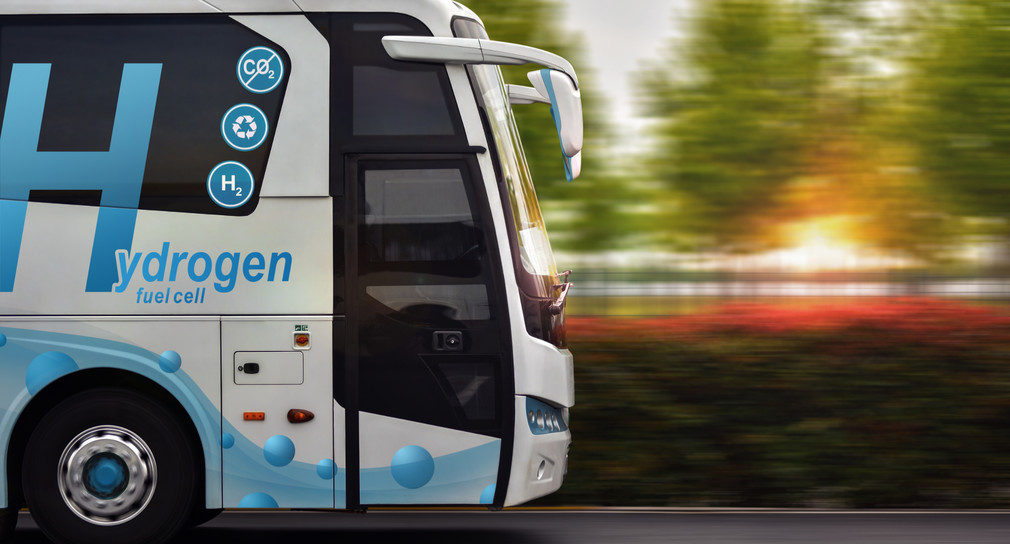
The project aims to enable the practical use of zero-emission vehicles. To this end, as part of the upcoming fleet renewal in Mannheim and Heidelberg, a total of 40 vehicles will be replaced with vehicles featuring electric powertrains. This will be accompanied by upgrades to the depots and the charging infrastructure.
Implementation
H2Rhein-Neckar is linked to the H2Rivers project. H2Rivers was selected as a nationwide lighthouse project for hydrogen and fuel cell technology and was recognized as a “HyPerformer” under the HyLand call for proposals. The synergy between these two projects is intended to promote the advancement of hydrogen and fuel cell technology in Baden-Württemberg. To this end, and as part of this funding, preliminary studies on the technical feasibility and efficiency of H2 technology have already been conducted, such as within the state-funded H2SOUL project. Fuel cell range extender (BZ-REX) technology was thus identified as the most economically viable solution. Consequently, a total of 40 BZ-REX vehicles will be deployed in Mannheim and Heidelberg as part of the upcoming fleet renewal under the H2Rhein-Neckar initiative. Furthermore, the necessary charging and infrastructure will be adapted at the depots. Since there is a lack of institutions with experience in such a project, accompanying research will ensure optimal implementation. Among other things, the various deployment scenarios will be used to design the infrastructure in an efficient manner and to develop a strategy for sustainability that balances energy supply and consumption.
KIT’s Contribution to the Project
The target of the ITIV’s project contribution is to conduct a simulation-based evaluation and gather information on factors influencing range, as well as to design depots and adapt existing depot management systems for alternative drive systems—specifically fuel cells.
By developing a simulation model of the vehicle, the technology is examined in terms of range and daily consumption patterns. Special data loggers are then used to record vehicle data in order to refine the simulation model and optimize the predictions. In this way, anomalies during operation can be identified, and adjustments can be made to parameters.
In addition, depot processes are examined in light of emerging issues and challenges. Simulation is also used for this purpose, and changes and additions to existing depot management systems are evaluated.
The competitiveness of the drive technologies is assessed based on the insights gained.