

_linkedin_230.jpg)
Philipp Rigoll
- 14.10.2025
- Semantically searchable data management system for the development of image-based driving systems
- Group: Prof. Sax
- philipp rigoll ∂does-not-exist.fzi de
- www.fzi.de/team/philipp-rigoll/
Corrector: Prof. Dr. Ulrich Schwanecke (Hochschule RheinMain - HSRM)
Summary of the dissertation
_800.jpg)
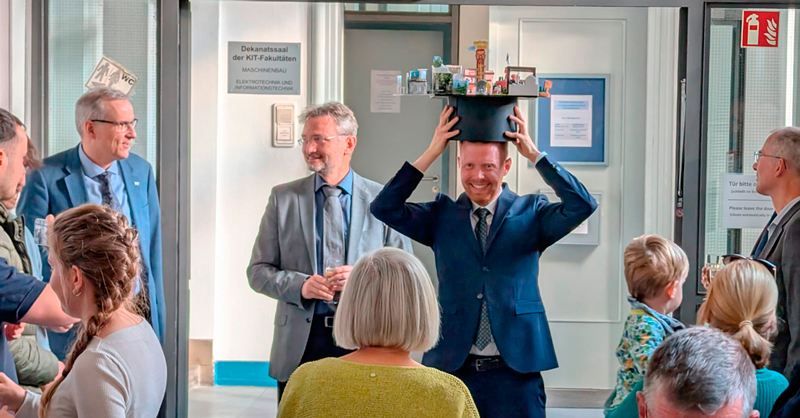
Highly automated driving systems hold potential for ecological, economic and safety-related improvements in mobility, but require careful development and testing - especially when incorporating image-based neural networks. However, the provision of corresponding images for testing during development is still uneconomical and difficult to integrate into the development process due to extensive automotive data sets.
This dissertation proposes a data management system for the semantic searchability of these data sets. The developed system is independent of manual annotations and fits into the development process of highly automated driving systems. The dissertation contributes to improving the mobility of the future by creating the basis for testing highly automated, image-based driving systems.
We congratulate Philipp Rigoll on this great achievement!
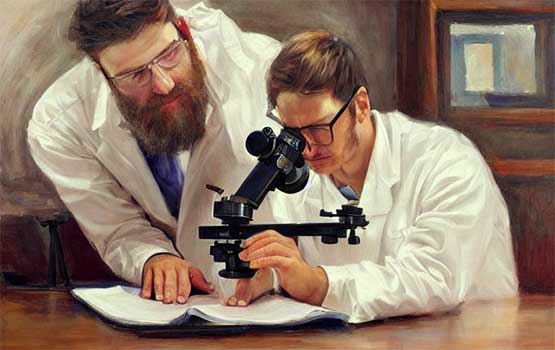
Data analysis and data mining
Driven by digitalization, data is now central to the most diverse areas of life and the economy. It appears in a wide variety of forms and manifestations. Data is being collected, processed and stored in more and more places. Data analysis is concerned with extracting valuable information from this data. The focus of data mining is on the use of statistical methods to find and describe patterns and hidden correlations in the data. At the FZI/ITIV, we are researching how to carry out these analyses as agnostically as possible. The primary goal is to ensure that the analyses are comprehensible and that the results are presented in an understandable way.

Augmentation with generating artificial neural networks
In addition to generalizing to unknown data, artificial neural networks are able to generate new data (the three images above were generated by text input with the stable diffusion architecture). In addition to purely artistic and creative work, this procedure also allows missing data points to be added to data sets. This data set enlargement is called augmentation. At the FZI/ITIV, we are researching the use of augmentation with generating artificial neural networks in connection with the development of automated driving functions.
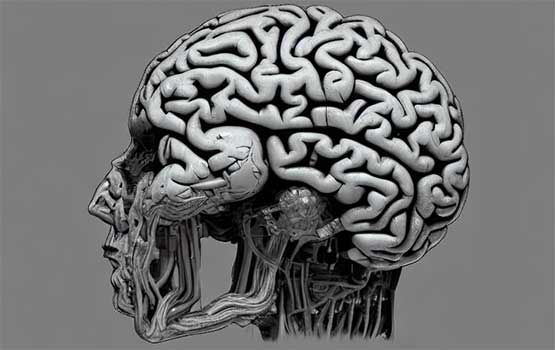
Machine learning
Building on data analysis and data mining and the associated understanding of the data, machine learning goes one step further. Here, algorithms learn the laws of the data as a statistical model and can generalize to other data after a learning phase. Machine learning has proven itself particularly in the form of artificial neural networks and is used, for example, to predict time series, detect anomalies and detect objects. At the FZI/ITIV, we develop and investigate these methods in the context of automated driving, for example.