


Philipp Rigoll
- Exam date: October 14, 2025
- Thesis Topic: "A Semantically Searchable Data Management System for the Development of Image-Based Driving Systems"
- Group: Prof. Sax
- philipp rigoll ∂does-not-exist.fzi de
- www.fzi.de/team/philipp-rigoll/
Corrector: Prof. Dr. Ulrich Schwanecke (Hochschule RheinMain - HSRM)
Summary of the Dissertation

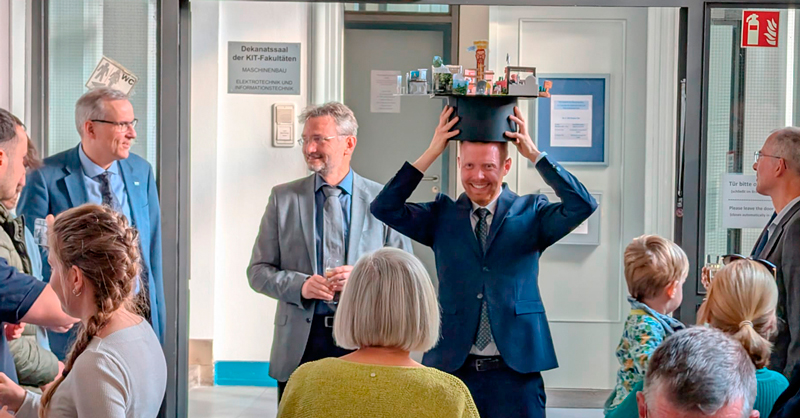
Highly automated driving systems hold the potential for environmental, economic, and safety-related improvements in mobility, but they require careful development and testing—especially when image-based neural networks are involved. However, due to the sheer volume of automotive datasets, providing suitable images for testing during development remains cost-prohibitive and difficult to integrate into the development process.
This dissertation proposes a data management system for the semantic searchability of these datasets. The developed system is independent of manual annotations and integrates into the development process of highly automated driving systems. This dissertation contributes to improving the mobility of the future by laying the foundation for testing highly automated, image-based driving systems.
We congratulate Philipp Rigoll on this outstanding achievement!
Data Analysis and Data Mining
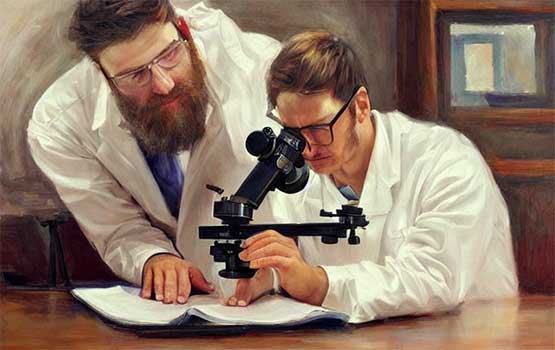
Driven by digitalization, data now plays a central role in a wide variety of areas of life and the economy. It takes on a wide range of forms and characteristics. Data is being collected, processed, and stored in more and more places. Data analysis focuses on extracting valuable information from this data. Data mining focuses on using statistical methods to identify and describe patterns and hidden relationships within the data. At FZI/ITIV, we are conducting research to perform these analyses as agnostically as possible. Our primary target is to ensure the traceability of the analyses and, consequently, a clear presentation of the results.

Augmentation Using Generative Artificial Neural Networks
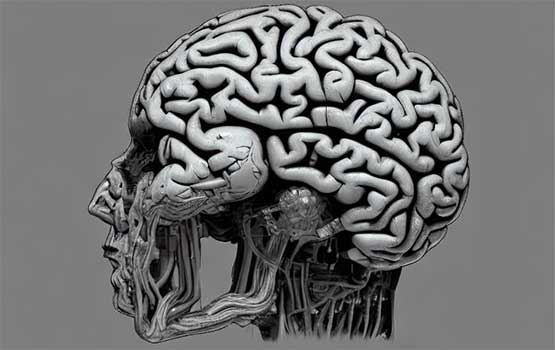
In addition to generalizing to unknown data, artificial neural networks are capable of generating new data (the three images above were generated using text prompts with the Stable Diffusion architecture). In addition to purely artistic and creative work, this approach also allows for the supplementation of missing data points in datasets. This expansion of the dataset is referred to as augmentation. At FZI/ITIV, we are conducting research on the use of augmentation with generative artificial neural networks in the context of developing automated driving functions.
Machine Learning
Building on data analysis, data mining, and the resulting understanding of the data, machine learning takes things a step further. Here, algorithms learn the patterns in the data as a statistical model and, after a training phase, can generalize these patterns to new data. Machine learning has proven particularly effective in the form of artificial neural networks and is used, for example, for time series forecasting, anomaly detection, and object detection. At FZI/ITIV, we develop and investigate these methods, for example, in the context of automated driving.