

Teaching on Site: ITIV Administers Exams for Students in Kenya

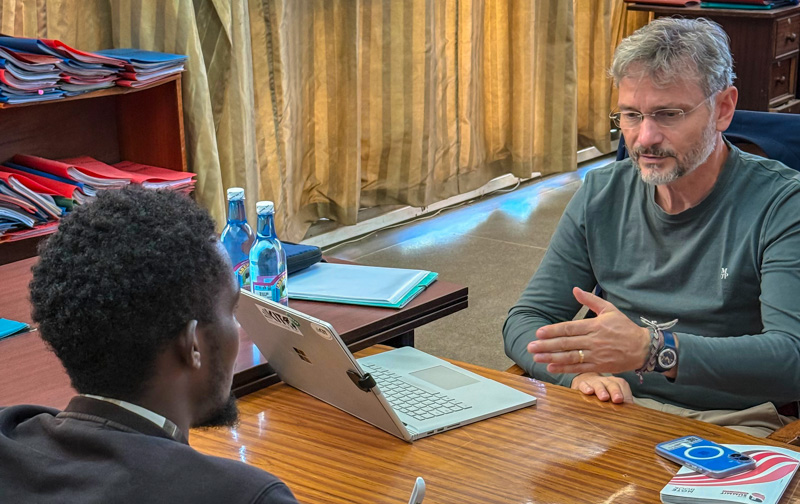
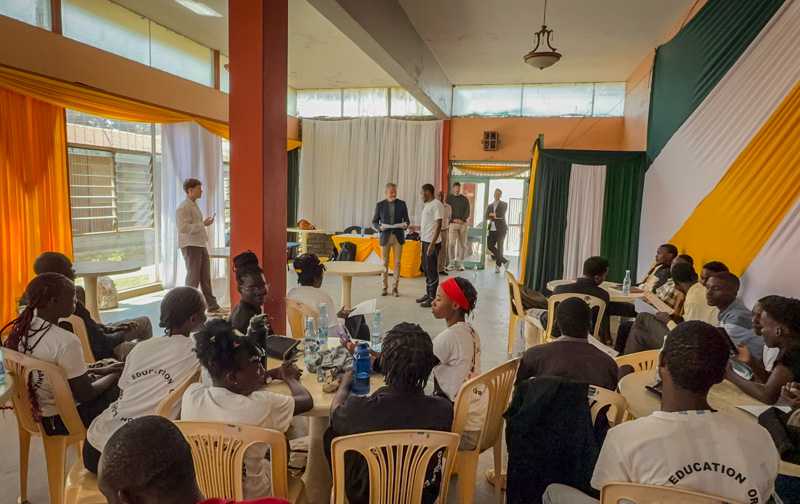
Following discussions on future collaboration within the framework of the EAC AI Alliance, the ITIV team continued its trip to Africa in Nairobi, Kenya. There, on August 12, Prof. Eric Sax and his scientists Nikola Lukezic and Moritz Zink administered the final oral exams to students.
This was based on a remote lecture offered by the ITIV during the summer term on information technology, algorithms, and machine learning. The lecture was developed by the team and tailored specifically to the needs of the participants in Kenya.
The exams, now held in Nairobi, took place in collaboration with the Liberating Education Organization (LEO). Nearly 25 students took the final exam, and about 70 percent passed successfully.
For the ITIV, the visit was much more than just an assessment of academic performance. The team had already conducted a similar course in Nairobi in February 2026. This return trip provided an opportunity to monitor the students’ progress and gain valuable insights for the further development of international educational programs.
A particular focus was placed on the exchange of ideas regarding education and teaching. Discussions with a Kenyan teacher provided insights into the local school system, varying learning prerequisites, and regional requirements for educational programs in the divisions of computer science and artificial intelligence. The insights gained will help tailor course content and teaching approaches even more effectively to the needs of various target groups in the future.
The stop in Nairobi highlights the practical aspect of ITIV’s engagement in East Africa. While the groundwork for new partnerships in research, innovation, and AI skills development was laid in Arusha, the focus in Kenya was on working directly with students and teachers.
The ITIV looks forward to continuing its collaboration with the Liberating Education Organization and further expanding their joint educational offerings.
For more information, see this article from clicKIT, the online magazine for students