

More Electricity Through Existing Lines

The rapid expansion of renewable energy, particularly in northern Germany, combined with the decommissioning of nuclear and coal-fired power plants in the south, is steadily widening the gap between supply and demand for electricity, especially in the industrial centers of the south. Since the expansion of the power grid has not yet kept pace with the expansion of renewable energy, wind power operators, for example, must be compensated with billions of euros each year for curtailing their plants. To meet the growing demand for electricity resulting from the Energy transition or from data centers, more capacity is needed in the transmission grids.
This is where the forward-looking “Aeolus” research project comes in: Its focus is on the optimized use of existing overhead power lines. The target is to use precise measurement data to more accurately determine the actual load-bearing capacity of lines and to better utilize existing overhead lines. In this way, the project aims to contribute to safe and efficient grid operation and to complement the necessary grid expansion.
Focus on Optimizing Overhead Lines
“Aeolus” relies on the intelligent optimization of existing infrastructure: Using innovative fiber-optic sensor technology, weather conditions—and thus the actual load-carrying capacities of high-voltage overhead power lines—can be better determined, allowing their transmission capacity to be increased on a case-by-case basis without compromising operational safety. This forward-looking project, named after the Greek god of the winds, is funded under the “Eighth Energy Research Program for Applied Energy Research” of the Federal Ministry for Economic Affairs and Energy (BMWE).
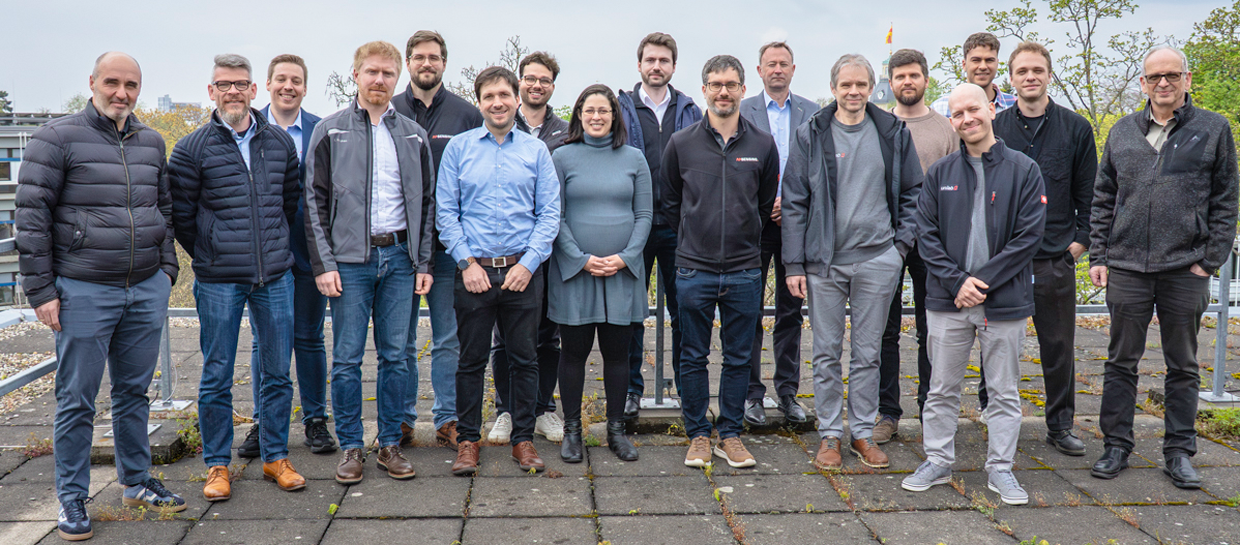
Coordinated by the Institute for Information Processing Technology (ITIV) at the Karlsruhe Institute of Technology (KIT) and in collaboration with a strong consortium—comprising the three transmission system operators “50Hertz Transmission GmbH” from Berlin, “Tennet TSO GmbH” from Bayreuth, “TransnetBW GmbH” from Stuttgart, as well as “AP Sensing GmbH” from Böblingen, the energy network “fokus.energie e.V.” from Karlsruhe, “unilab Systemhaus GmbH” from Paderborn, and “WEPROG GmbH” from Altdorf—the implementation of the technology takes place as part of “Mission Energiesystem 2045.”
This technology can help optimize the utilization of existing power lines, reduce congestion management, and buy time for the necessary grid expansion: “With ‘Aeolus,’ we want to demonstrate how existing overhead power lines can be safely utilized at higher capacities—depending on the situation—based on precise measurement data. In addition to information on wind and temperature, we also expect to detect acoustic events along the line, which could be significant for monitoring critical infrastructure,” said Prof. Dr. rer. nat. Wilhelm Stork, head of the Microsystems Technology and Optics Division at ITIV.
The Principle: Wind Cools the Line
Until now, the maximum permissible capacity of overhead power lines has been determined based on a theoretical “worst-case weather scenario.” The current-carrying capacity is primarily limited by the maximum line temperature of approximately 80 °C. If the temperature rises above this level, the material expands and the head sags. As a result, the required safety clearance to the ground, trees, or buildings may be compromised, which in the worst case can lead to dangerous arcing or permanent damage to the material.
However, since this extreme weather scenario rarely occurs in everyday conditions, the solutions developed in the project are based on “weather-dependent overhead line operation” (WAFB). Whether improving the overall efficiency of the energy system, guaranteeing supply reliability, or ensuring technological innovation, the principle behind it is simple: When the wind blows, it cools the power lines. The cooler the lines are, the more electricity they can safely carry. Until now, grid operators have often relied on statistical weather prediction models, supplemented by measurements of weather conditions at specific locations using sensors on the lines or on the towers. The new technology now replaces statistical weather estimates with real-time measurements taken directly along the line.
The Cable Becomes the Sensor
The major advantage of the method under investigation is that there is no need to laboriously install expensive, additional sensors on the poles. The technology utilizes the fiber-optic cables that are already integrated into the top protective cable (the so-called “ground wire”) of the power poles. Wind causes the power lines to vibrate with subtle oscillations that are barely visible to the naked eye. The optical fiber inside detects these movements and enables precise measurement of key wind parameters such as wind speed and wind direction. The cable thus functions along its entire length as a giant, continuous measuring device in every single span of the overhead line.
Savings in the Billions
If this technology were implemented nationwide, power lines could already be utilized more fully, buying time for the necessary grid expansion—which could result in savings in the billions. Furthermore, if existing lines were utilized to their full capacity based on precise data, costly emergency interventions in the power grid (known as “re-dispatching”) would need to be carried out less frequently. Ultimately, all electricity customers would benefit from more stable grids and lower grid fees. Transmission line operators could thus manage their grids even more safely and stably.
Structured Roadmap for the “Aeolus” Project
The “Aeolus” project aims to achieve a practical roadmap toward a smart grid in several steps, leading up to its planned completion in 2029:
-
Analysis and Setup: First, the technical requirements will be defined, the best measurement sites selected, and the fiber-optic cables set up as continuous anemometers.
-
AI and Weather Forecasts: The collected wind data will be fed directly into modern weather forecasting models. Smart AI algorithms will calculate how effectively the wind actually cools the power lines, even in challenging terrain such as valleys or forests.
-
Database and Security: An extremely fast and scalable database system stores the data in accordance with the highest standards of data protection and security. The system can also immediately detect operational disruptions, sabotage, or vandalism.
-
Flying Helpers: The system is complemented by an autonomous inspection drone developed at ITIV. Since the surrounding environment is also important for effective cooling, the drone flies autonomously along the transmission line route and monitors the line’s condition. To ensure continuous operation, it draws power directly from the high-voltage line.
-
Real-World Testing: The technology is being tested under real-world conditions in everyday use. The findings are presented in an accessible manner to highlight the technology’s benefits to both experts and the general public.
With this approach, the “Aeolus” project demonstrates how digitalization and modern technology can tangibly accelerate the Energy transition. By using existing grids more efficiently through intelligent data analysis, the project makes a decisive contribution to a secure, affordable, and sustainable electricity supply for the future.
Press contact for the project:
Johannes Wagner, Press Spokesperson for fokus.energie e.V., +49 721 96492 786, Johannes.Wagner∂fokusenergie.net
The project website is currently under construction. It will be updated accordingly as research results become available.
